Posts

Showing posts with the label benefits

Aquatic | Weeds in Sri Lanka | Short List

No. Common Name Botanical name 55 Water hyacinth Monochoria vaginalis 56 Water shamrock Marsilea quandrifolia 57 Common water hyacinth Eichhornia crasspes 58 Water Spinach Ipomoea aquatica 59 Bulrush plant Typhia latifolia

Weeds Control Methods in Agriculture

Physical Methods Covering Manual remove Tillage Thermal methods Cutting Cultural Methods Stale seedbed Buried drip irrigation Crop rotation Plant density Correct fertilizer application Use better cropping system Biological Methods Specially used for aquatic weeds. Biological agents such as pathogens and other animals reduce or kill the infected weeds. Chemical Methods Organic approaches Organic weed control involves anything other than applying manufactured chemicals. Typically a combination of methods are used to achieve satisfactory control. Herbicides However, weed control can also be achieved by the use of herbicides. Selective herbicides kill certain targets while leaving the desired crop relatively unharmed. Some of these act by interfering with the growth of the week and are often based on plant hormones. Herbicides are generally classified as follows: Control herbicides Systemic herbicides Soil born herbicides Pre-emerged ...

Classification of Weeds

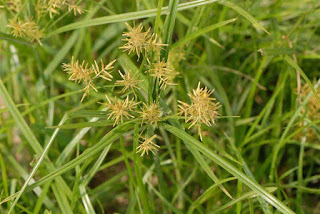
The weeds with similar morphological characters, lifecycle, requirements of soil, water climatic condition are grouped together as a class or category. It is always economical and practically feasible to manage the group of weeds as compared to manage the individual weed species. According to Morphological Characteristics Grasses -  Nodes and internodes can be clearly seen. The stem is round and the middle of the stem consists of a bole. Internodes are hollow. Leaves are arranged alternatively in grasses. Also, have leaf sheath and leaf blade. Sedges -  There are no clear nodes and internodes of three flowers and any other leaves are in there. The stem is rectangular and solid. Broadleaves -  The leaves are broad and solid. According to Life Cycle Depending upon their life cycle weeds can be classified as, Annual weeds -  They complete their lifecycle within one year or one season. Biennial weeds -  They take at leas...

Disadvantages of Weeds in Agriculture

Reduce crop quality by contaminating the commodity. Interference with the harvest. Serve as hosts for crop disease or provide shelter for insects to overwinter. Limit the choice of crop rotation sequences and cultural practices. Production of chemical substances which is toxic to crop plants, animals or humans.

Advantages of Weeds in Agriculture

It is the most versatile medicine available. It is rarely a cure but it can manage hundreds of symptoms. It is more effective at fighting tumors than chemotherapy or radiation. It is the safest choice for recreational drug use. It cannot cause an overdose, nor a physical addiction. Sobering up is easier to do with weed than other substances. It opens up the mind and makes you see things from a whole new perspective. Despite not being physically addictive, people can lead to a negative spiral down until someone has an empty life.

Benefits of Weeds in Agriculture

Despite the negative impacts of weeds, some plants usually thought of as weeds may actually provide some benefits. Some attributes include: Soil stabilization Habitat and feed for wildlife Nectar for bees Aesthetic qualities Add organic matter Provide genetic reservoir Human consumption and Provide employment opportunities

Characteristics of Weeds

The following can be counted as some of the typical characteristics of weeds. a) Abundant seed production b) Rapid population establishment c) Seed dormancy d) Long-term survival of buried seed e) Adaptation for spread f) Presence of vegetative reproductive structures g) Ability to occupy sites disturbed by human activities 

What is a Weed? (Introduction)

Image
A weed is a plant considered undesirable in a particular situation; a plant in the wrong place. The term weed has no botanical significance, because a plant that is a weed in one context is not a weed when growing in a situation where it is in fact wanted, and where one species of plant is a valuable crop plant, another species in the same genus might be a serious weed. There are numerous definitions of a weed, including; A plant out of place and not intentionally sown. A plant growing where it is not wanted. A plant whose virtues have not yet been discovered. Plants that are competitive, persistent, pernicious, and interfere negatively with  human activity. No matter what definition is used, a weed is a plant whose undesirable qualities outweigh its good points, according to man. Our human activities create weed problems since no plant is a weed in nature. Though we may try to manipulate nature for our own good, nature is persistent. Through the manipulation ...